Man had a skin transplant in the back of his throat. The skin started growing hair after it was transplanted…
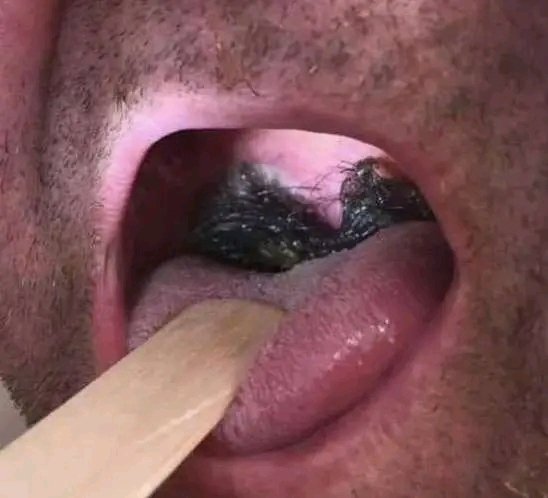
A rare and unsettling medical case captured global attention after a man underwent a skin graft inside the back of his throat — and the transplanted skin later began growing hair. While it may sound like something from a science-fiction movie, doctors confirmed that the phenomenon is medically possible under very specific conditions.

The patient required reconstructive surgery at the back of his throat following severe damage caused by illness and multiple procedures. To repair the affected area, surgeons used a skin graft taken from another part of his body, a common medical practice when local tissue is too damaged to heal on its own. The transplant itself was considered successful, and initially, the patient recovered as expected.
However, months later, he began experiencing unusual sensations in his throat. He reported a tickling feeling, irritation, and a persistent foreign-body sensation that would not go away. After further examination using specialized imaging, doctors made a surprising discovery: hair was actively growing from the transplanted skin inside his throat.
The reason this happened lies in basic human biology. Skin contains hair follicles, and when skin is transplanted from a part of the body that naturally grows hair — such as the forearm, leg, or scalp — those follicles can remain active even after being moved to a completely different location. In this case, the skin retained its original biological function despite being placed inside the throat, a warm, moist environment that can actually encourage continued growth.

Doctors explained that while skin grafts are routinely used in reconstructive surgery, this complication is extremely rare. Surgeons typically try to use hair-free donor skin when operating in the mouth or throat, but in emergency or complex cases, ideal placement isn’t always possible. Over time, as the graft healed and established blood supply, the hair follicles became active again.
The growing hair caused serious discomfort for the patient. Besides irritation, it interfered with swallowing and increased the risk of infection. To resolve the problem, physicians had to remove the hair using laser treatments and minor surgical procedures. In some cases like this, long-term hair removal is required to prevent regrowth.
Medical experts stress that this case, while shocking, does not mean skin transplants are unsafe. Skin grafting saves thousands of lives each year and is essential in treating burns, cancer-related tissue loss, trauma, and congenital defects. What made this case unusual was the location of the graft combined with active hair follicles.

The incident has since become an important teaching example in medical literature. It highlights the need for careful donor-site selection in reconstructive surgery and long-term follow-up after complex transplants. It also reminds doctors that even tissues moved from one part of the body to another can retain their original biological behavior.
For the patient, the outcome was ultimately positive. After treatment, the hair growth was controlled, and his throat function improved significantly. While the experience was uncomfortable and alarming, doctors were able to manage the complication successfully.