
The Bikini: From Scandal to Symbol of Freedom 👙
One tiny garment changed the world — sparking outrage, inspiring bans, and even leading to arrests. In the timeless struggle between modesty and freedom, the bikini became both a scandal and a statement. Condemned by popes, banned by governments, yet embraced by women around the world, it evolved from a symbol of rebellion into an emblem of empowerment.
The Early Days of Modesty
At the dawn of the 20th century, swimwear was designed for protection, not style. Swimsuits were made of heavy wool and covered the body from neck to knee. Modesty laws governed beaches across the United States. In Chicago’s Clarendon Beach, tailors stood ready to sew up any swimsuit deemed too revealing. In Washington, D.C., beach police carried tape measures to enforce coverage rules, while in New York, showing one’s knees could lead to a fine.

Annette Kellerman: The Woman Who Dared

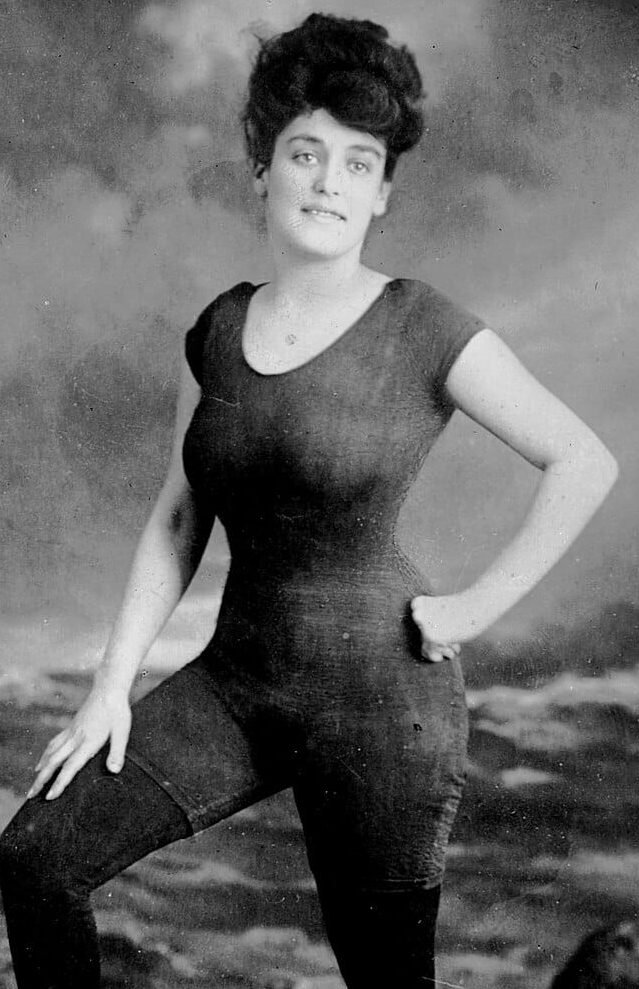
In 1907, Australian swimmer Annette Kellerman revolutionized beachwear by wearing a one-piece suit that revealed her arms, legs, and neck. Her bold choice allegedly led to an arrest — though unverified, the story captured public imagination. Soon after, Kellerman launched her own line of one-piece swimsuits, the “Annette Kellermans,” marking the birth of functional, stylish women’s swimwear.
The 1920s and the Rise of Liberation
The flapper era brought rebellion not only to dance floors but also to beaches. In California, a group known as the “skirts be hanged girls” pushed for more practical, form-fitting swimsuits that allowed real freedom of movement. Women were no longer content to simply follow rules — they wanted to swim, surf, and feel alive.

1946: The Bikini Explosion
Everything changed in 1946, when French engineer Louis Réard introduced the bikini — the first swimsuit to reveal the navel. The name itself came from Bikini Atoll, where the U.S. had recently conducted a nuclear test. The reaction was immediate and explosive.

Governments rushed to ban it. France outlawed bikinis in 1949; Germany followed suit until the 1970s. The Vatican denounced it as sinful. Countries like Italy, Spain, and Portugal imposed strict decency laws. Even in Australia, women were fined or removed from beaches for wearing bikinis that were “too revealing.”
The Iconic Image That Shocked the World
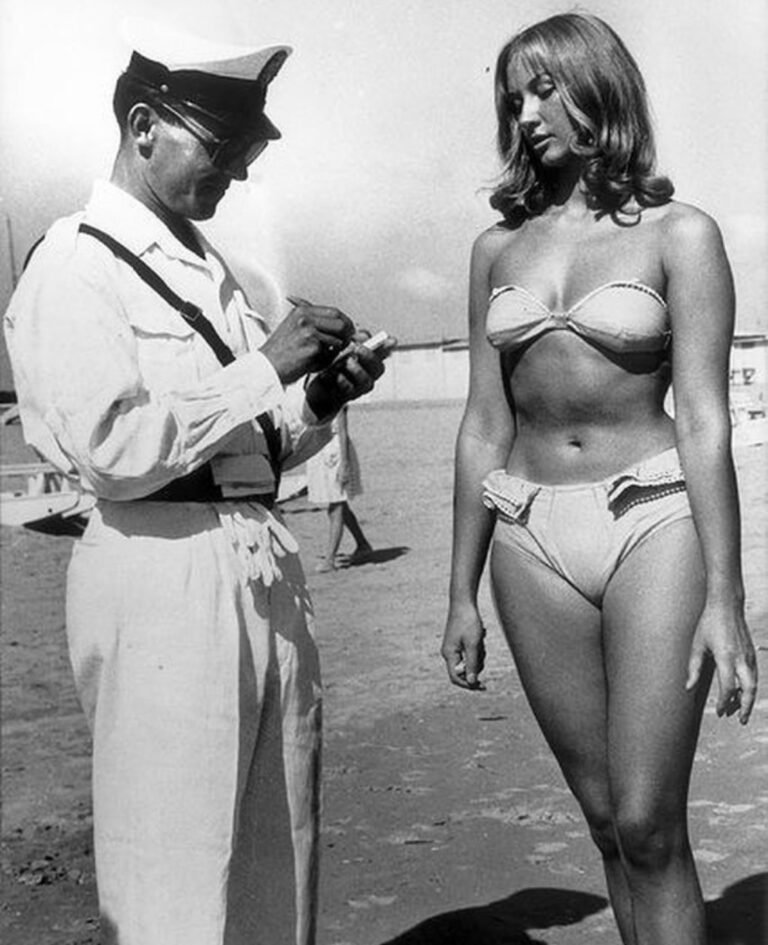
One photograph defined the controversy — a uniformed man ticketing a young woman in a bikini on an Italian beach. Though the details remain unclear, the image reflected the real cultural tension between public decency laws and personal freedom.
Hollywood’s Role in the Revolution
The 1950s and 1960s saw the bikini inch its way into pop culture, despite opposition from Hollywood’s Hays Code, which banned exposed navels on-screen. Then came the women who changed everything — Marilyn Monroe, Brigitte Bardot, and Ursula Andress.
Bardot’s film The Girl in the Bikini transformed the swimsuit into a cinematic statement of confidence. And in 1962, Andress’s unforgettable scene in Dr. No — walking out of the sea in a white bikini — turned the garment into a global symbol of beauty, strength, and independence.
The 1970s and Beyond: From Scandal to Self-Expression
By the 1970s, the bikini had shed its taboo status. String bikinis, thong designs, and new materials redefined beach fashion. What began as rebellion had become the new normal. Both women’s and men’s swimwear reflected a growing culture of body confidence and personal expression.

The Modern Era: Choice and Confidence
Today’s swimwear industry celebrates diversity and individuality. From modest full-coverage designs to bold micro-bikinis, the focus is no longer on how much skin is shown — but on how confident one feels wearing it. The bikini, once banned and condemned, now stands for freedom, empowerment, and body positivity.
What began as a scandal has become a celebration. The next time you slip into a swimsuit, remember — it’s more than just fabric. It’s a century-long story of courage, expression, and the right to define beauty on your own terms.