
Depressing Find at the Bottom of the Mariana Trench is a Warning to the World 🌊⚠️
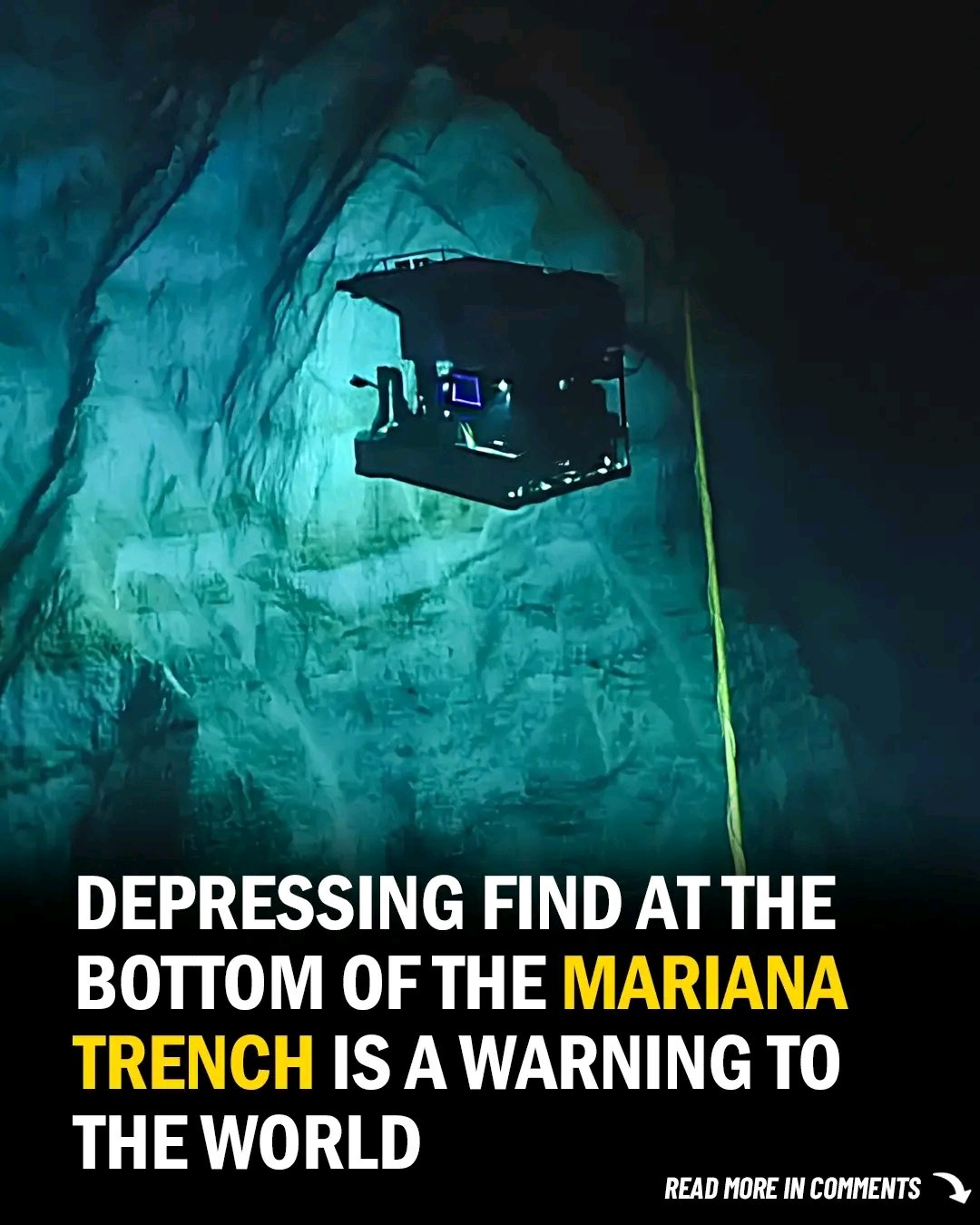
At nearly 11 kilometers deep, the Mariana Trench is the deepest known part of our planet’s oceans — a place so remote and dark that many believed it to be untouched by human influence. For decades, scientists thought this underwater abyss was one of the last pure sanctuaries of nature. But recent explorations have revealed a shocking truth that has left researchers both alarmed and saddened.

When a deep-sea expedition sent submersibles to explore the trench’s floor, scientists discovered not rare jewels of marine life — but plastic bags, candy wrappers, and other man-made trash. The very bottom of the ocean, a place that sunlight has never reached, is now polluted by the waste we produce on land.
What They Found
- Plastic debris wedged into rocks and sand
- Candy and food wrappers in pristine-looking sediment
- Microplastics inside small crustaceans living in the trench
- Evidence of chemical pollution that has made its way into deep-sea organisms
Why This is Alarming
The Mariana Trench should be one of the most isolated places on Earth. Yet, these findings prove that human impact reaches everywhere — even the most hidden corners of our planet. Scientists say this isn’t just about the trench — it’s about the health of our oceans as a whole.
Pollutants don’t just stay where they are dumped. Ocean currents carry them thousands of kilometers, and over time, they sink deeper and deeper until they reach places no human has ever physically been.

What It Means for Us
- Plastic pollution is permanent: Most plastics take hundreds of years to break down, releasing harmful chemicals as they degrade.
- It’s entering the food chain: Deep-sea creatures contaminated with microplastics can eventually affect species we eat.
- It’s a global problem: No single country can solve this — it requires worldwide action.
How You Can Help
- Reduce single-use plastics — bags, bottles, and packaging.
- Recycle properly and support companies using eco-friendly materials.
- Join beach and river clean-ups to stop trash before it enters the ocean.
- Spread awareness so more people understand the urgency.
FAQs
1. How deep is the Mariana Trench?
It’s about 10,984 meters (36,037 feet) deep at its lowest point — deeper than Mount Everest is tall.
2. How did plastic get there?
Through ocean currents and sinking debris, much of it originating from land-based waste.
3. Is this affecting marine life?
Yes, microplastics have been found inside deep-sea animals, impacting their health.

4. Can we clean the Mariana Trench?
It’s nearly impossible at that depth. The focus must be on preventing further pollution.
💡 Final Thought: If human trash can reach the deepest, most remote point on Earth, it means no part of the planet is safe from pollution. The time to act is now — because the ocean’s health is our own.